
Call us
301-363-4651 (Available 9 a.m. to 5 p.m. CST from Monday to Friday)

| Code | CSB-RA159341MA1HU |
| Size | $49.9 |
| Order now | |
| Promotion |

|
| Image |
|
| Have Questions? | Leave a Message or Start an on-line Chat |
| Application | Recommended Dilution |
|---|---|
| IHC | 1:20-1:200 |
| FC | 1:20-1:200 |
Epidermal growth factor receptor (EGFR) stands as one of the most intensively studied receptor tyrosine kinases in cancer biology, serving as a critical regulator of cell proliferation, survival, and differentiation. As a founding member of the ErbB receptor family, EGFR dysregulation through overexpression, mutation, or amplification drives oncogenic signaling in numerous malignancies, making it both a valuable biomarker and therapeutic target across multiple tumor types.
This recombinant rabbit monoclonal antibody, clone 29C10, offers the experimental consistency that demanding research protocols require. Generated against recombinant human EGFR protein and produced through recombinant technology, this antibody provides sequence-defined specificity with the lot-to-lot reproducibility essential for longitudinal studies and multi-site collaborations. The rabbit IgG format delivers high affinity binding while the affinity-chromatography purification ensures minimal background in sensitive applications.
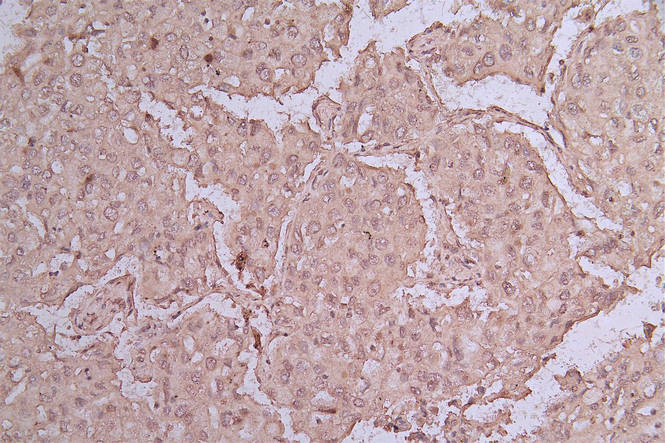
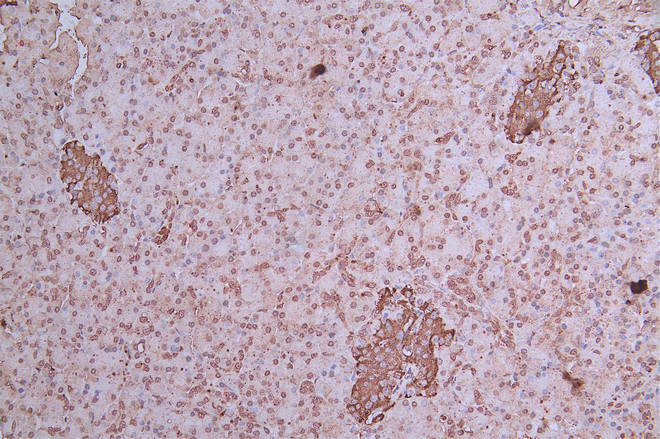
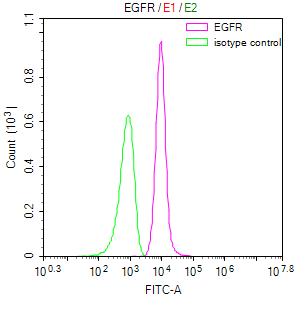
Validation studies demonstrate reliable performance across complementary detection platforms. Immunohistochemistry testing in paraffin-embedded human lung cancer tissue reveals clear membrane and cytoplasmic staining patterns consistent with EGFR's known localization, while parallel validation in human pancreatic tissue confirms robust detection across different tissue contexts at dilutions of 1:50. Flow cytometry analysis using NIH/3T3 cells shows distinct positive signal separation from isotype controls, confirming utility for quantitative single-cell applications.
This versatility across IHC and flow cytometry workflows provides researchers flexibility in experimental design, whether characterizing EGFR expression in archival clinical specimens or analyzing receptor levels in cell-based models. For investigators exploring EGFR biology in cancer research or signal transduction studies, this antibody delivers the technical reliability needed to generate reproducible, publication-quality data.
There are currently no reviews for this product.





