
Call us
301-363-4651 (Available 9 a.m. to 5 p.m. CST from Monday to Friday)

| Code | CSB-RA008968A2448phHU |
| Size | US$210 |
| Order now | |
| Image |
|
| Have Questions? | Leave a Message or Start an on-line Chat |
| Application | Recommended Dilution |
|---|---|
| WB | 1:500-1:5000 |
| IHC | 1:50-1:200 |
| IF | 1:20-1:200 |
Mechanistic target of rapamycin (mTOR) serves as a central integrator of cellular nutrient sensing, energy status, and growth factor signaling, making it one of the most intensively studied kinases in cell biology and cancer research. Phosphorylation at serine 2448 represents a key regulatory modification that reflects mTOR complex 1 activation status, providing researchers with a direct readout of this critical signaling node in pathways governing cell growth, autophagy, and metabolism.
This recombinant monoclonal antibody, generated against a synthetic phosphopeptide encompassing the S2448 site of human mTOR, offers the reproducibility and sequence-defined specificity that phospho-specific detection demands. Because recombinant production eliminates the batch variability inherent to traditional hybridoma methods, you can expect consistent performance across long-term studies and multi-site collaborations where experimental continuity matters.
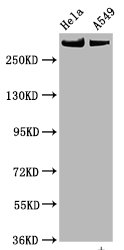
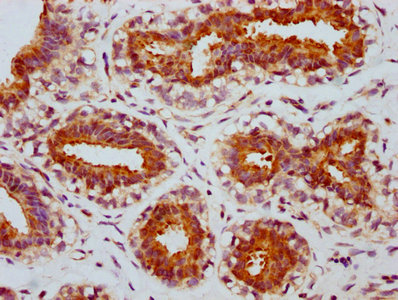
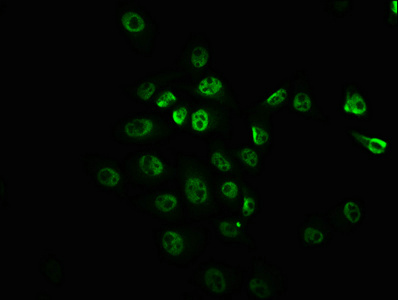
Validation across multiple detection platforms demonstrates genuine workflow flexibility. Western blot analysis in HeLa and A549 whole cell lysates confirms specific detection at the expected 289 kDa molecular weight, with recommended dilutions ranging from 1:500 to 1:5000 allowing optimization for your particular sample conditions. Immunohistochemistry staining in paraffin-embedded human breast cancer tissue reveals clear signal at 1:50 to 1:200 dilutions, while immunofluorescence studies in HeLa cells show robust cytoplasmic localization patterns consistent with mTOR's known subcellular distribution.
Whether you're investigating mTORC1 pathway dynamics in cancer models, examining autophagy regulation, or characterizing metabolic reprogramming in disease states, this phospho-specific antibody provides a reliable tool for monitoring mTOR activation status across complementary experimental approaches.
There are currently no reviews for this product.





