
Call us
301-363-4651 (Available 9 a.m. to 5 p.m. CST from Monday to Friday)

| Code | CSB-RA004935A0HU |
| Size | US$210 |
| Order now | |
| Image |
|
| Have Questions? | Leave a Message or Start an on-line Chat |
| Application | Recommended Dilution |
|---|---|
| WB | 1:500-1:5000 |
| IHC | 1:50-1:500 |
CD4 serves as a critical co-receptor on the surface of helper T cells, playing an essential role in adaptive immune responses by facilitating T cell receptor interactions with MHC class II molecules on antigen-presenting cells. As a defining marker of the helper T cell lineage, CD4 is fundamental to immunology research spanning infectious disease, autoimmunity, transplantation, and immuno-oncology studies.
This recombinant monoclonal antibody, clone 2B7, offers the reproducibility advantages inherent to recombinant technology. Because the antibody sequence is defined and production occurs in a controlled expression system, researchers can expect consistent performance across experiments and between lot numbers, eliminating the variability concerns often associated with traditional hybridoma-derived antibodies. Affinity chromatography purification ensures high purity for demanding applications.
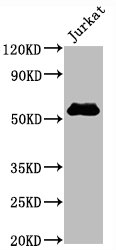
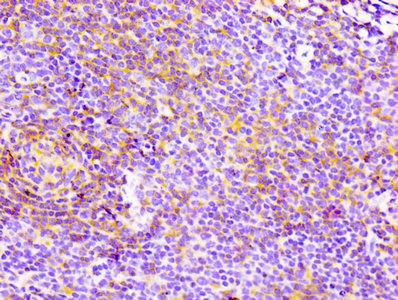
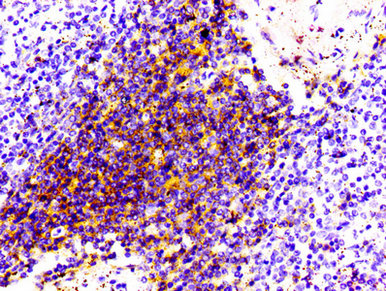
Validation studies confirm reliable performance across multiple experimental platforms. In Western blot analysis, the antibody detects CD4 at the expected 55 kDa molecular weight in Jurkat whole cell lysate, a well-established human T cell line, with effective detection at 0.8 μg/ml. For immunohistochemistry applications, the antibody has been validated in paraffin-embedded human lymph node and spleen tissues using a standard citrate buffer antigen retrieval protocol at 1:100 dilution, demonstrating clear staining patterns in these lymphoid organs where CD4-positive cells are abundant. The antibody is also suitable for ELISA applications, providing flexibility across different experimental workflows.
Whether investigating T cell biology, characterizing immune cell populations in tissue sections, or studying CD4-related signaling pathways, this antibody provides a dependable tool for human sample analysis in immunology research.
There are currently no reviews for this product.





