
Call us
301-363-4651 (Available 9 a.m. to 5 p.m. CST from Monday to Friday)

| Code | CSB-EP005356HU |
| Abbreviation | Recombinant Human CHM protein |
| MSDS | |
| Size | $224 |
| Order now | |
| Image |
|
| Have Questions? | Leave a Message or Start an on-line Chat |
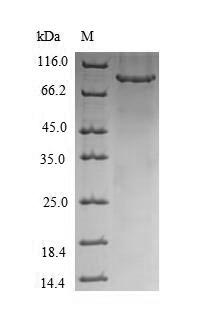
This recombinant human CHM protein comes from E. coli expression and includes the complete sequence spanning amino acids 1 to 653. The protein carries an N-terminal 6xHis-tag, which makes purification and detection more straightforward. SDS-PAGE analysis confirms the purity exceeds 90%, suggesting this should deliver reliable results for research work. The product is strictly for research purposes—not for diagnostic or therapeutic use.
Rab proteins geranylgeranyltransferase component A 1 (CHM) appears to be a key player in the Rab geranylgeranyltransferase complex. This complex drives post-translational modification of Rab proteins, a process that seems critical for proper Rab protein function and cellular positioning. Since Rab proteins are heavily involved in how vesicles move around inside cells, understanding CHM's role may shed light on fundamental transport mechanisms.
Potential Applications
Note: The applications listed below are based on what we know about this protein's biological functions, published research, and experience from experts in the field. However, we haven't fully tested all of these applications ourselves yet. We'd recommend running some preliminary tests first to make sure they work for your specific research goals.
Based on the provided information, the recombinant Human CHM is expressed in E. coli, a prokaryotic system that may not support proper folding of this large eukaryotic protein (653aa). CHM requires precise folding and potential post-translational modifications for its role in Rab prenylation. The full-length sequence and N-terminal 6xHis tag are present, but since activity is unverified, the protein cannot be assumed to be correctly folded or bioactive. E. coli often fails to fold complex eukaryotic proteins correctly, so experimental validation is essential to confirm conformation and function.
1. Protein-Protein Interaction Studies with Rab Proteins
Pull-down assays could reveal how this recombinant CHM protein interacts with different Rab proteins. The N-terminal 6xHis tag works well for attaching the protein to nickel-affinity resins. Having the full-length sequence (1-653aa) means all the potential binding sites are present for thorough interaction mapping. However, if CHM is misfolded, it may not interact physiologically with Rab proteins, leading to non-specific binding or false negatives. This application should only be pursued after validating protein folding and activity through functional assays.
2. Antibody Development and Validation
The high purity (>90%) and complete sequence make this recombinant CHM protein a solid choice for generating antibodies against human CHM. Whether creating polyclonal or monoclonal antibodies, this protein could serve as an effective immunogen. It also works as a positive control for Western blots, ELISAs, and immunofluorescence during antibody testing phases. The His tag simplifies purification and attachment in different immunoassay setups. Such antibodies would likely prove useful for tracking CHM expression and location in cell biology studies. Even if misfolded, antibodies may recognize linear epitopes, but validation against native CHM is recommended.
3. Biochemical Characterization and Structural Studies
Basic biochemical analysis becomes possible with this recombinant protein, determining molecular weight, isoelectric point, and heat stability through methods like dynamic light scattering and differential scanning calorimetry. The complete construct provides the full protein framework for detailed biophysical examination. Size exclusion chromatography could assess whether the protein forms complexes and check its overall structural soundness. These studies would establish essential biochemical parameters for designing future experiments and handling protocols. This application is appropriate and should be prioritized to assess folding quality.
4. In Vitro Binding Assays with Prenylation Substrates
Direct binding studies with potential prenylation targets become feasible using surface plasmon resonance or fluorescence polarization approaches. The His tag helps with protein attachment and purification for these quantitative binding experiments. However, if CHM is misfolded, binding assays may yield inaccurate kinetics and affinities, leading to misleading conclusions about substrate preferences. This application requires prior validation of CHM's folding and prenylation activity.
Final Recommendation & Action Plan
Given the uncertainty in folding and bioactivity, it is recommended to first perform biochemical characterization (e.g., size-exclusion chromatography for oligomeric state, circular dichroism for secondary structure) to assess protein folding. If possible, conduct functional assays (e.g., in vitro prenylation activity with Rab substrates) to confirm bioactivity. If validated, the protein can be used for interaction and binding studies; if not, focus on antibody development and biochemical studies. Always include controls such as native CHM or known active standards when available. Due to the E. coli expression system, consider alternative eukaryotic systems for functional applications if folding issues are detected.
There are currently no reviews for this product.





