
Call us
301-363-4651 (Available 9 a.m. to 5 p.m. CST from Monday to Friday)

| Code | CSB-RA574653A0HU |
| Size | US$210 |
| Order now | |
| Image |
|
| Have Questions? | Leave a Message or Start an on-line Chat |
| Application | Recommended Dilution |
|---|---|
| IHC | 1:50-1:200 |
MICA (MHC class I polypeptide-related sequence A) serves as a critical stress-inducible ligand for the NKG2D receptor, playing a central role in immune surveillance against infected and transformed cells. This protein is frequently upregulated in epithelial tumors and virally infected tissues, making it an important marker for researchers investigating innate immune responses, tumor immunology, and the mechanisms by which cancer cells evade immune detection.
This recombinant monoclonal antibody, clone 9F1, offers the reproducibility and consistency that demanding immunology research requires. Produced using recombinant technology with a defined sequence, this antibody eliminates the lot-to-lot variability that can compromise longitudinal studies or multi-site collaborations. The rabbit host and monoclonal nature ensure high specificity for human MICA, while affinity chromatography purification delivers a clean reagent suitable for sensitive detection methods.
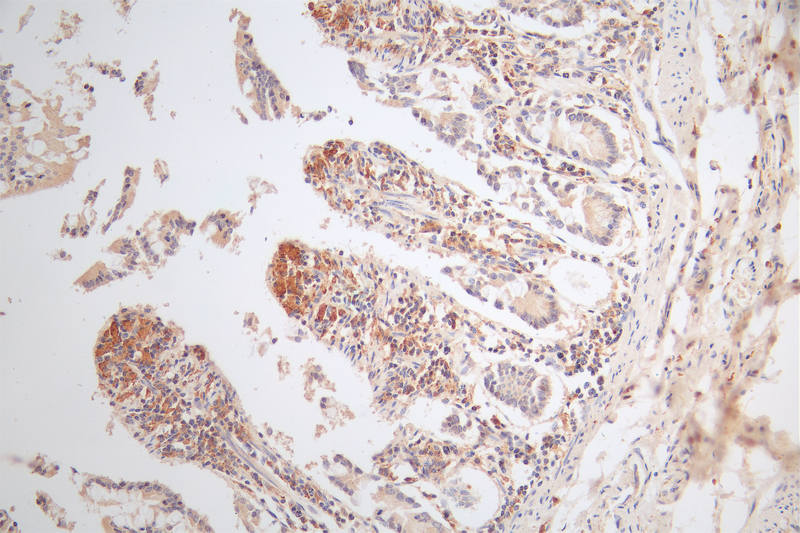
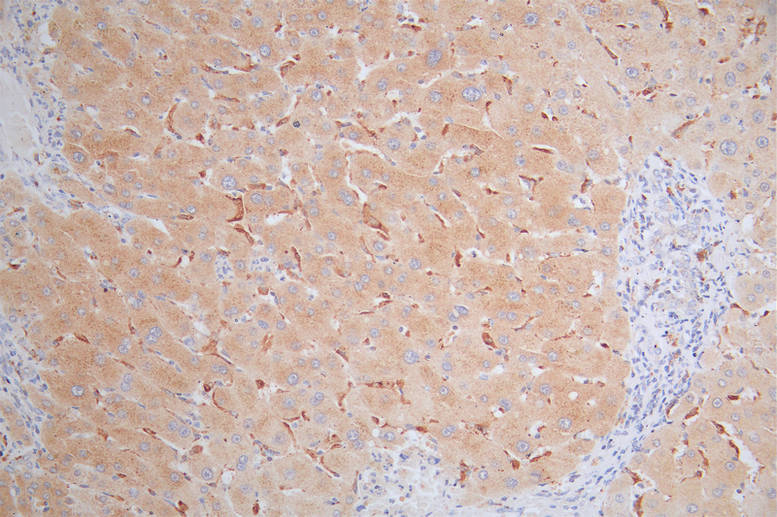
Validation studies demonstrate reliable performance in immunohistochemistry applications across diverse human tissue contexts. Testing in paraffin-embedded human small intestine tissue confirms the antibody's ability to detect MICA in normal tissue architecture, while staining in human liver cancer tissue showcases its utility for oncology-focused investigations. Both validations employed a 1:80 dilution with citrate buffer antigen retrieval, providing researchers with an optimized starting point for their own protocols. The recommended working range of 1:50 to 1:200 offers flexibility for fine-tuning signal intensity across different sample types and experimental conditions.
For researchers exploring NKG2D-mediated immune recognition, tumor immune evasion mechanisms, or stress response pathways, this antibody provides a dependable tool for characterizing MICA expression patterns in human tissues and advancing our understanding of immune-tumor interactions.
There are currently no reviews for this product.





