
Call us
301-363-4651 (Available 9 a.m. to 5 p.m. CST from Monday to Friday)

| Code | CSB-RA012767A191phHU |
| Size | US$210 |
| Order now | |
| Image |
|
| Have Questions? | Leave a Message or Start an on-line Chat |
| Application | Recommended Dilution |
|---|---|
| WB | 1:500-1:5000 |
| IHC | 1:50-1:200 |
| IF | 1:20-1:200 |
| IP | 1:200-1:1000 |
Linker for activation of T-cells (LAT) serves as a critical adaptor protein in T cell receptor signaling, where its phosphorylation at tyrosine 191 creates docking sites for downstream effectors that drive T cell activation and immune responses. Detecting this specific phosphorylation event provides researchers with a direct readout of proximal TCR signaling activity, making it valuable for studies of immune cell function, signaling pathway dynamics, and immunological disorders.
This recombinant monoclonal antibody, generated against a synthetic phosphopeptide corresponding to human phospho-LAT at Y191, offers the reproducibility that phospho-specific detection demands. Because recombinant production ensures a sequence-defined, clonally derived reagent, researchers can expect consistent performance across experiments and between lots—particularly important when tracking subtle changes in phosphorylation status across experimental conditions.
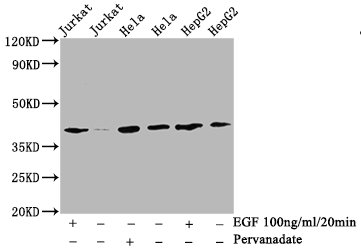
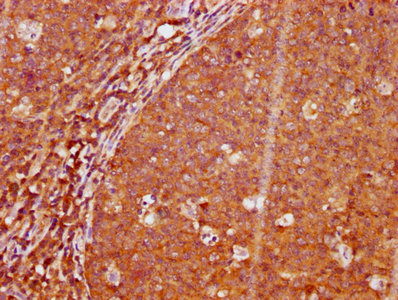
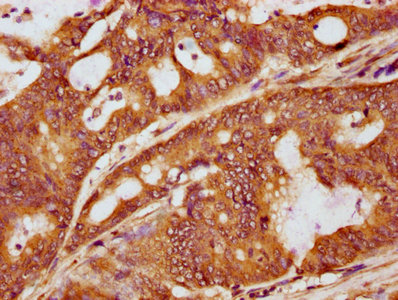
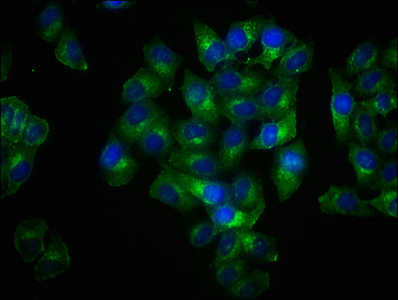
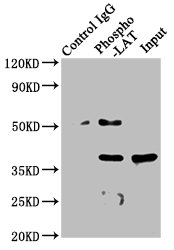
Validation studies demonstrate reliable detection of phospho-LAT at the expected 38 kDa molecular weight in Western blot applications, with positive results obtained in Jurkat, HeLa, and HepG2 cell lysates following appropriate stimulation with EGF or pervanadate treatment. The antibody performs effectively in immunohistochemistry, where testing in paraffin-embedded human tonsil and colon cancer tissues shows clear staining using citrate buffer antigen retrieval on automated Leica Bond systems. Immunofluorescence applications have been validated in HeLa cells, revealing subcellular localization patterns, while immunoprecipitation capability has been confirmed in A549 cell lysates.
With verified performance across Western blot, immunohistochemistry, immunofluorescence, and immunoprecipitation platforms, this antibody provides flexibility for researchers investigating T cell signaling mechanisms, immune checkpoint biology, or phosphorylation-dependent protein interactions in immunology research.
There are currently no reviews for this product.





